Project 26.3
- PhD student: Boya Cui
- Supervisor: Shuqing Xu
- Further TAC-members: Ann Kathrin Huylmans , Nijat Nariman
- Research Group
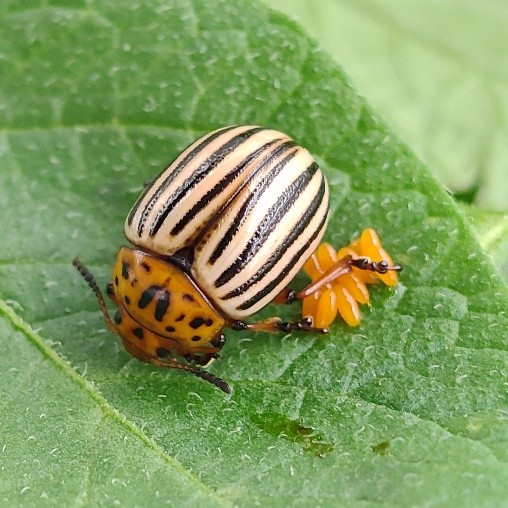
Most agricultural pests have high fecundity, yet the evolutionary and molecular mechanisms remain unclear. In a recent study, Colorado potato beetle (Leptinotarsa decemlineata; CPB), a major pest of Solanaceae plants, showed rapid evolution of fecundity during experimental evolution. Using a combination of forward and reverse genetics, this project aims to identify the genetic and regulatory mechanisms underlying the evolution of fecundity in CPB.
Rapid adaptation by agricultural pests poses a major threat to global food security, yet the evolutionary mechanisms that enable pest populations to respond so quickly to novel environments remain poorly understood. A central, but underexplored, component of pest adaptation is fecundity. Many major pests combine strong stress tolerance with high reproductive output, suggesting that rapid adaptation may depend not only on survival under selection but also on the evolution or maintenance of reproductive capacity.
Experimental evolution provides a powerful approach for investigating these processes by allowing selective environments to be manipulated under replicated and controlled conditions. The Colorado potato beetle (Leptinotarsa decemlineata; CPB) is an ideal model for addressing this question. It is a globally important agricultural pest with a short generation time, high fecundity and a strong capacity for rapid adaptation. CPB became a major pest following the expansion of cultivated potato, and it is now known for its repeated evolution of resistance to insecticides and host-associated stresses.
Since 2024, we initiated a replicated experimental-evolution experiment, in which CPB populations evolved under different stress conditions. After ten generations, these populations showed not only rapid adaptation to the imposed stress conditions but also rapid changes in fecundity. This system therefore provides an ideal opportunity to investigate the molecular mechanisms underlying the rapid evolution of fecundity.
Here, we will first identify the causes of the rapid changes in fecundity by performing genetic crosses. Then, we will perform organ-specific transcriptome profiling to identify which organ is likely responsible for the rapid fecundity evolution in CPB. In addition, we will perform bulk-segregant analysis and genetic manipulation to further identify the causal genetic variants. Together, by linking experimental evolution with population genomics, transcriptomics and functional validation, the project will reveal the genetic and regulatory mechanisms that underpin the rapid evolution of fecundity in a major agricultural pest.